From Grid Management to Value Creation: JingTsing Digital Power Redefines Transformer-Level Energy Storage
Addressing Distribution Network Challenges: How Transformer-Level Energy Storage Solves Five Key Issues
Today’s distribution networks face a range of critical challenges, including transformer overload, bidirectional power flow overload, three-phase imbalance, harmonic distortion, reactive power imbalance, insufficient power supply reliability, and difficulties in renewable energy integration.
Traditional solutions, such as transformer capacity expansion and grid infrastructure upgrades, often involve high investment costs and long implementation cycles, making it difficult to balance economic efficiency and rapid deployment.
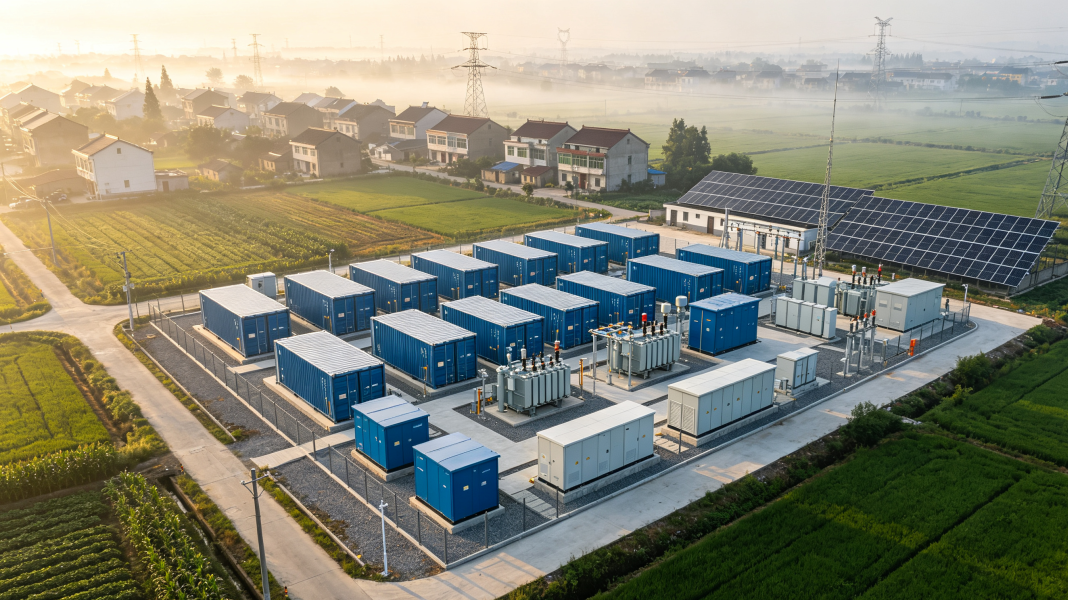
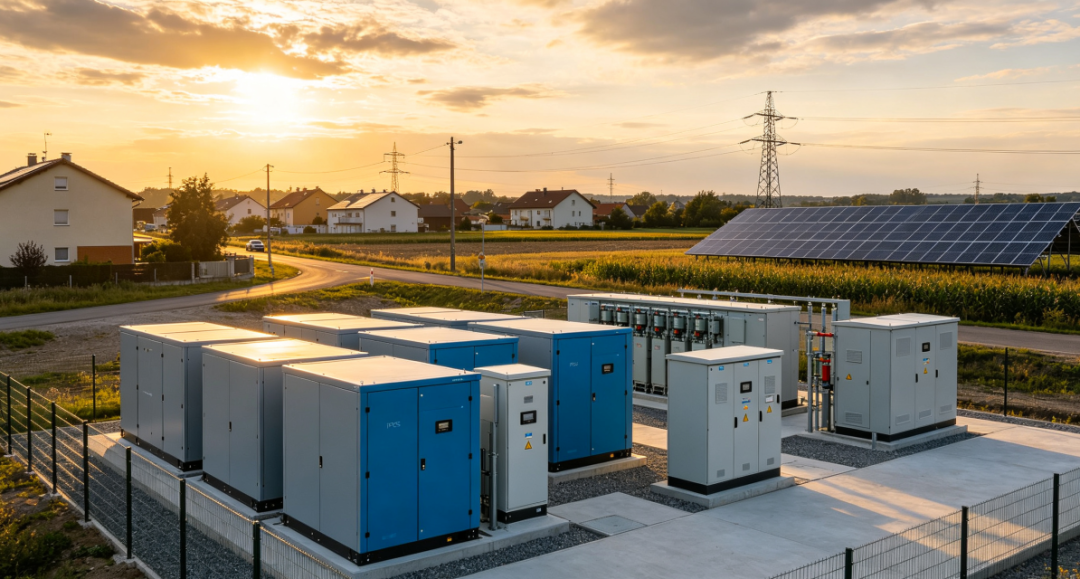
As a distributed energy storage solution deployed on the low-voltage side of distribution transformers, transformer-level energy storage is designed to address these challenges by improving grid flexibility, stability, and renewable energy utilization.
01 | Overcoming Reverse Power Flow from Distributed PV
By the end of 2025, China’s cumulative distributed photovoltaic (PV) capacity had exceeded 530 GW. During peak solar generation periods at noon, PV output can significantly exceed local load consumption capacity, causing reverse power flow toward upstream grids.
Transformer-level energy storage enables local absorption of excess PV generation through charging, effectively mitigating reverse power flow issues and improving renewable energy utilization.
02 | Managing Voltage Fluctuations and Voltage Violations
In rural distribution networks, long feeder lines often cause voltage drops during peak electricity demand periods, while high PV generation can lead to excessive voltage rise.
Transformer-level energy storage functions as an intelligent power regulation device, dynamically absorbing or injecting power to maintain voltage within a safe and stable operating range.
03 | Precise Three-Phase Imbalance Mitigation
Many rural distribution transformer areas contain a large proportion of single-phase loads with highly variable consumption patterns. Severe three-phase imbalance can increase neutral line current, trigger zero-sequence protection malfunctions, and significantly increase line losses.
JTES-SiC130K-A adopts a phase-level independent control topology, enabling real-time monitoring of three-phase load variations and differentiated current compensation for each phase. This allows dynamic balancing of phase power and significantly improves distribution network efficiency.
04 | Reactive Power Compensation and Power Factor Improvement
The combination of inductive loads, such as air conditioners, pumps, and motors, together with distributed PV systems, can result in reactive power imbalance.
With millisecond-level response capability, transformer-level energy storage can dynamically inject or absorb reactive power, improving the grid connection point power factor to above 0.95, reducing line losses, and releasing available transformer capacity.
05 | Enhancing Power Supply Reliability
Rural and remote distribution transformer areas often suffer from long feeder distances and higher risks of outages caused by lightning strikes or external damage. Annual outage durations can range from several hours to more than ten hours.
During unexpected grid failures, critical loads such as communication base stations and agricultural temperature-control systems may face service interruptions.
By integrating with STS (Static Transfer Switch) technology, transformer-level energy storage enables a seamless grid-connected/off-grid transition system, ensuring uninterrupted power supply for critical loads.
From Parameter Competition to Scenario-Based Competition
As transformer-level energy storage moves toward large-scale deployment, market evaluation criteria are evolving.
Customers are no longer focused solely on PCS conversion efficiency. They increasingly value whether products truly understand distribution network operating characteristics and whether they can precisely adapt to real-world transformer-level energy storage applications.
In the future, PCS competition will shift from “parameter-driven competition” to “scenario-driven competition.”
The companies capable of solving real distribution network challenges will define the future market.
JTES-SiC130K-A: Precisely Designed for Transformer-Level Energy Storage Applications
Based on the operational characteristics of distribution networks and the practical requirements of transformer-level energy storage, JingTsing Digital Power’s JTES-SiC130K-A String-Type SiC Intelligent Air-Cooled Energy Storage PCS has been specifically optimized for applications requiring:
- High-frequency power regulation
- Fast response
- Phase-level independent control
- High reliability
- Long-term stable operation
Through optimized control strategies, system architecture, response performance, and environmental adaptability, JTES-SiC130K-A achieves precise alignment between product capabilities and transformer-level energy storage scenarios.
01 | Millisecond-Level Response for Faster Grid Regulation
Facing scenarios such as rapid PV output fluctuations, concentrated EV charging, and dynamic load changes, JTES-SiC130K-A provides 20 ms-level active and reactive power response, enabling rapid charge/discharge switching and timely voltage stabilization.
It delivers flexible distribution network regulation, keeping transformer areas operating in an optimal state.
02 | Phase-Level Control for More Accurate Three-Phase Management
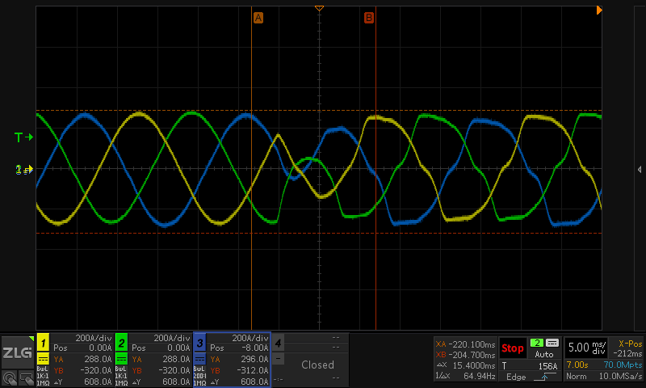
Unlike conventional PCS solutions, JTES-SiC130K-A adopts a three-phase four-leg topology with independent phase control capability.
The system continuously monitors three-phase load variations and dynamically compensates phase power, achieving precise three-phase imbalance mitigation.
The imbalance level can be controlled within 2%–4%, effectively reducing line losses and improving distribution network efficiency.
03 | Seamless Grid-Connected/Off-Grid Switching for Continuous Power Supply
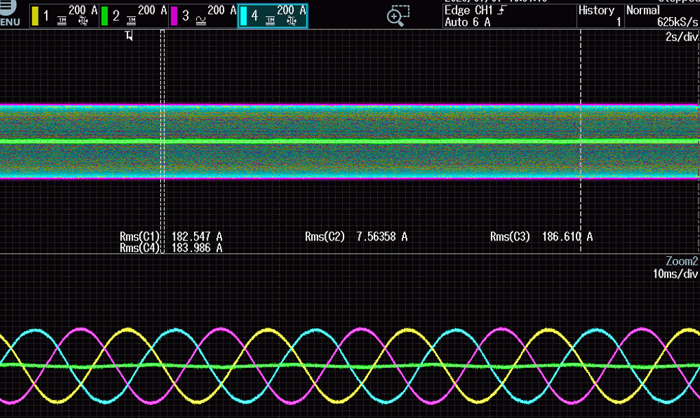
JTES-SiC130K-A supports seamless grid-connected/off-grid switching within 20 ms and can handle 100% three-phase unbalanced loads.
With support for VF/VSG operating modes and black start capability, the system can rapidly establish a microgrid during grid failures, enabling zero-interruption power supply for critical loads.
It provides reliable energy security for industrial production, commercial operations, and critical public facilities.
04 | Intelligent Energy Management: Transforming Storage from Grid Tool into Energy Asset
Future transformer-level energy storage will not only support distribution network management but also participate in electricity market operations.
Equipped with standardized communication interfaces and open protocols, JTES-SiC130K-A enables deep integration with EMS, dispatch platforms, and Virtual Power Plant (VPP) systems.
It supports applications including PV peak regulation, demand response, and VPP aggregation transactions, maximizing the operational value of energy storage assets.
05 | Full SiC High-Efficiency Architecture for Long-Term Value Creation
JTES-SiC130K-A adopts advanced SiC power modules, achieving:
- >99% peak conversion efficiency
- >98% rated efficiency
The high-efficiency architecture significantly improves the lifecycle economics of energy storage systems.
Compared with conventional solutions, JingTsing Digital Power’s modular SiC packaging design enhances device consistency and thermal balance while maintaining exceptional efficiency, ensuring stable and reliable long-term operation.
06 | Designed for Harsh Environments and Complex Operating Conditions
Transformer-level energy storage systems are typically deployed in outdoor substations, box-type transformers, and other unattended environments, requiring reliable operation under extreme conditions including high temperature, low temperature, humidity, and dust exposure.
Following the philosophy of “Scenario-Driven Product Design,” Jingqing Digital Power continuously enhances product adaptability for long-term distribution network operation.
JTES-SiC130K-A supports:
- Wide operating temperature range: -30°C to +60°C
- Full-power operation without derating at 50°C
- High-voltage DC integrated design for improved system safety
- Sealed and encapsulated power components for enhanced protection against moisture, dust, and insects
The product is designed for reliable long-term operation in industrial parks, mining sites, coastal areas, and other demanding environments.
Scenario-Driven Innovation Defines the New Standard for Transformer-Level Energy Storage PCS
With the continued development of high-quality distribution networks, transformer-level energy storage is becoming a critical connection between renewable energy, power grids, and end users, and will serve as a key infrastructure component for future flexible distribution systems.
For transformer-level energy storage applications, PCS is not merely an energy conversion device — it is the “intelligent brain” of the entire system.
It determines system efficiency, grid management performance, and the long-term value of energy storage assets.
JingTsing Digital Power remains committed to driving technological innovation through real-world application scenarios. By continuously enhancing PCS capabilities in fast response, precise control, intelligent dispatch, and environmental adaptability, the company delivers solutions that better understand transformer-level energy storage requirements, better fit distribution network applications, and better support the future evolution of power systems.
Looking ahead, JingTsing Digital Power will continue focusing on core PCS technology innovation, providing safer, more efficient, and more reliable energy storage products and solutions to accelerate the development of advanced distribution networks and contribute to a more flexible and resilient global new energy system.